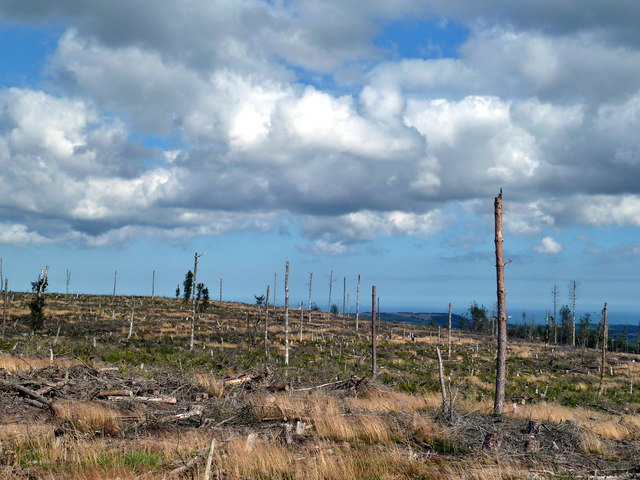
What is Resilience? It is the basic capacity of any system to withstand or to recover quickly from difficulties.
I have a special interest in how resilience is shaped and influenced in humans, society, and ecological systems. Since resilience is essential for survival, wellbeing and prosperity in the presence of an ever changing environment, I am looking for the key ingredients to increase and maintain resilience in those systems.
Climate Change and Resilience
Climate change is often described as a problem of carbon emissions. Charts rise, graphs curve upward, and the conversation narrows to parts per million in the atmosphere. But beneath the numbers lies a deeper story — one about disturbance and resilience.
At its most fundamental level, climate change begins with physics. The Earth receives energy from the sun and releases energy back into space. For thousands of years, this balance fluctuated within relatively stable bounds. Then, in a geological instant, human industry began releasing vast quantities of stored carbon into the atmosphere. Carbon dioxide, methane, and other greenhouse gases accumulated and began trapping heat that would otherwise escape. The balance shifted. The planet warmed.
This energetic imbalance is real, measurable, and central. Without the rise in greenhouse gases, modern warming would not be occurring at its current speed.
Yet the Earth is not a machine that simply heats up in a linear fashion. It is a living, interconnected system. As temperatures rise, ice melts, and darker oceans absorb more sunlight. Forests stressed by drought lose their ability to store carbon. Permafrost thaws and releases methane long locked in frozen ground. The system responds to disturbance, sometimes amplifying it. These responses are called feedbacks, and they determine how far and how fast change unfolds.
Here we encounter the deeper concept: resilience.
Resilience is the capacity of a system to absorb shock without losing its essential structure and function. A resilient forest can burn and regrow. A resilient coral reef can recover after bleaching. A resilient climate system can endure fluctuation without tipping into a new and irreversible state.
But resilience is not infinite. When biodiversity declines, soils erode, wetlands disappear, and ecosystems are simplified into monocultures, the buffering capacity of the planet weakens. The disturbance may be the same, but the consequences become greater. A system with low resilience does not bend; it fractures.
Human civilization is part of this same dynamic. Industrial society has been optimized for efficiency, speed, and growth. Supply chains stretch across continents. Energy systems depend on concentrated fossil reserves. Economies assume perpetual expansion. These structures generate extraordinary productivity, yet they also create fragility. When shocks arrive — whether ecological, economic, or social — tightly coupled systems can cascade.
History shows that civilizations rarely fall from disturbance alone. They falter when stress meets brittleness. When trust erodes, when institutions lose adaptability, when meaning systems fragment, resilience declines. Climate change, in this light, is not only an atmospheric issue. It is a test of how adaptive our civilizational structures truly are.
One could say that greenhouse gases initiate the disturbance, but resilience determines the trajectory. Remove the forcing, and warming slows. Increase resilience, and impacts soften. Fail at both, and tipping points loom.
There is also a deeper layer still — the story we tell about our place in the world. Modern culture has largely positioned humanity outside of nature, as manager, extractor, or optimizer. Regeneration has often been secondary to expansion. Resilience requires relationship. It requires diversity, redundancy, patience, and reverence for cycles that exceed human timelines.
Climate change is not only a crisis of carbon. It is a mirror. It reveals the condition of our soils, our forests, our oceans, our institutions, and our myths. It asks whether our systems — ecological and civilizational — can absorb the shock of our own acceleration.
Resilience is not the only factor in climate change. The physics of greenhouse gases remains foundational. But resilience determines whether disturbance becomes catastrophe or transformation.
The future will not be shaped by emissions curves alone. It will be shaped by whether we can rebuild the capacity of living systems — and our own societies — to endure, adapt, and regenerate.
In the end, the question is not simply how much the planet will warm.
It is how deeply we are willing to evolve.
One of the initiatives in my circle of influence is a fundraiser to preserve forests. As individuals we can only do so much, but if we team up and concentrate our efforts, we can and will make a difference!
For more information about the project: https://jackoscholten.com/let-the-forest-grow-old/
Donations can be made here: https://4fund.com/8tjr88
Discover more from Jacko Scholten
Subscribe to get the latest posts sent to your email.
 Jacko Scholten